What is it?
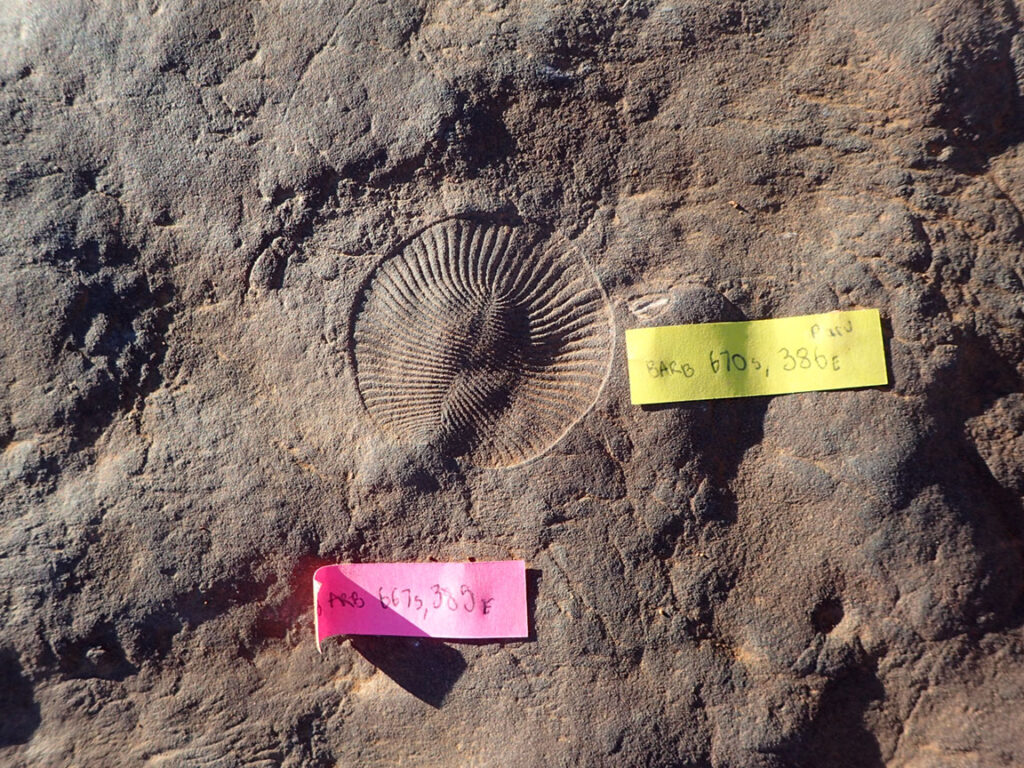
The fossil bed on display in the Nilpena Ediacara National Park has over 50 Dickinsonia on it, most of which are 8-10 centimetres, however, they can reach up to a metre in length.
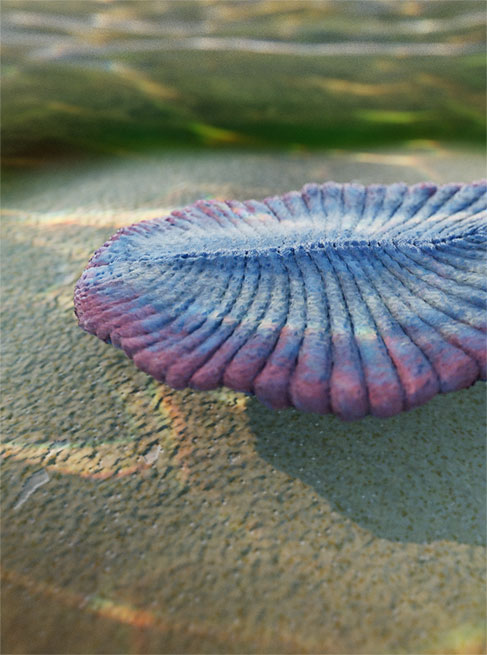
Dickinsonia’s body was made up of many modules attached to a midline, which are thought to have helped it move around the Ediacaran seafloor. Because Dickinsonia’s body was symmetrical, with a front and a back, and because it could move, it is thought to be very distantly related to modern animals.
This is a fossil of a Dickinsonia costata specimen
How do we know?
Dickinsonia is one of the first animals on the planet that could move. It would do this by contracting on one side, lifting into the air, and then landing. When it landed, it would eat all of the microbial mat underneath it, and when it was done, move on.
We know this because of the “footprints” it left fossilised on the seafloor: an impression of the underside of the animal and a hole in the microbial mat. These ‘footprints’ are oval shaped, showing that the animal did not slide along the ground like a snail, but simply landed and then lifted off again.