


What is it?
In the Ediacaran Period, organic mats covered much of the seafloor.
These mats were made up of a combination of tiny single-celled organisms as well as larger algae and even some animals. These organisms produced sticky substances that trapped sediment, creating something akin to a living carpet across the seafloor.
The organic mat is an important part of the story of the Ediacara Biota because without it, the conditions for such life would not have existed. The ecosystem relied heavily on the mat for nutrients and habitat. You might have seen modern organic mats in ponds, rivers, or tidepools during your travels, they’re usually green, slippery, and slimy. In the Ediacaran Period, organic mats were much more common than they are today because fewer animals moved and ate the mat. Later on, animals gained the ability to eat and disturb huge areas of organic mat, preventing them from covering the seafloor as they did in the Ediacaran Period.
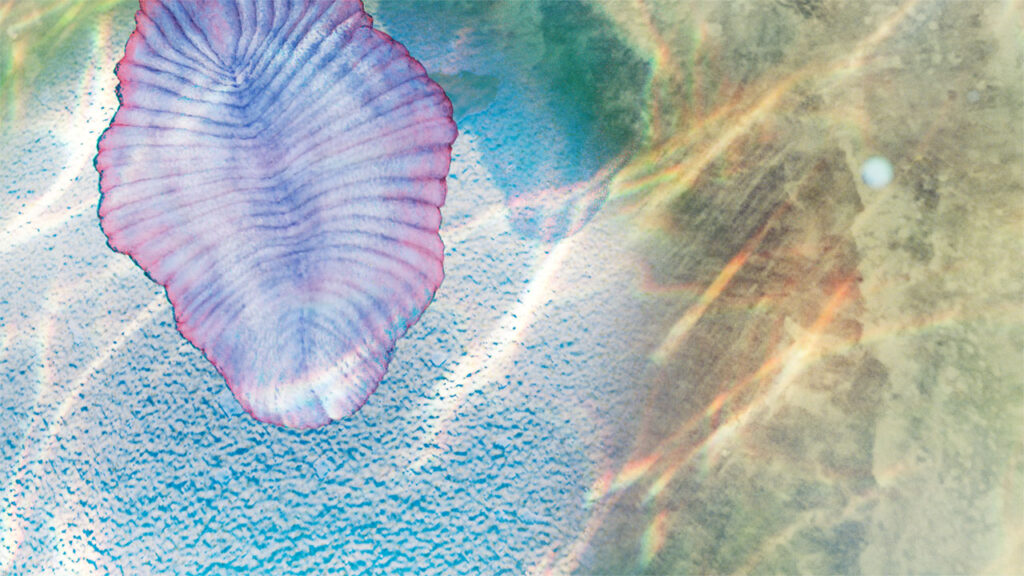
This is a fossil of a section of organic mat
How do we know?
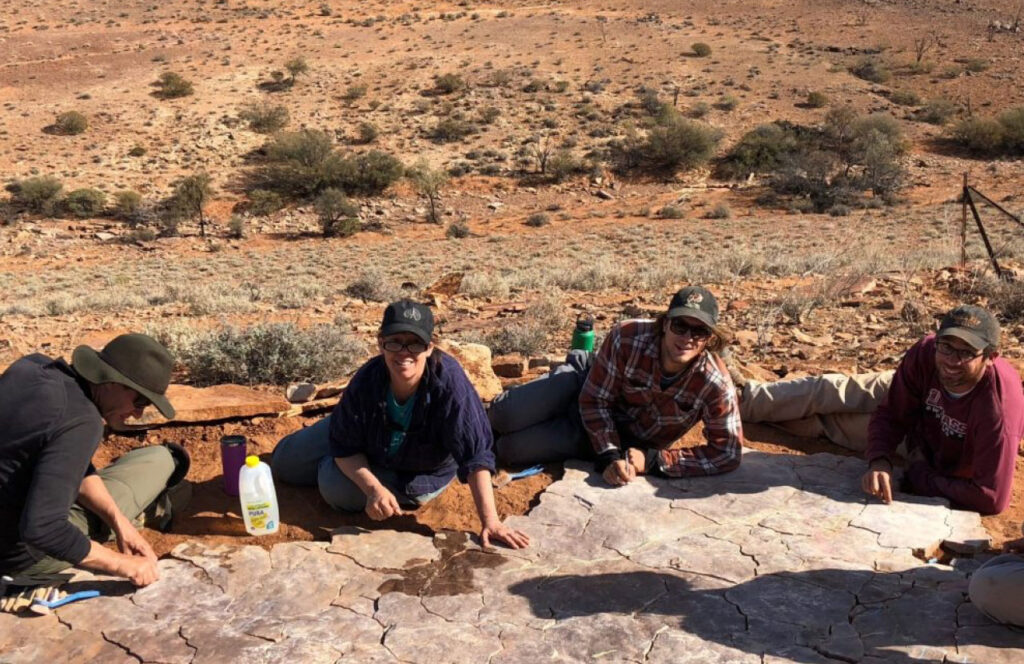
The animal fossils in Nilpena Ediacara National Park are surrounded by a bumpy, groovy, and textured surface. This is what remains of the microbial mat.
It is thanks in large part to the microbial mat that we have the incredibly preserved fossil beds of Nilpena Ediacara National Park. The thick organic layer that they formed aided in the preservation of the beautiful fossils you will see and separated each individual fossil bed. Without the organic mats these layers would be stuck together, and the fossils would remain hidden forever.